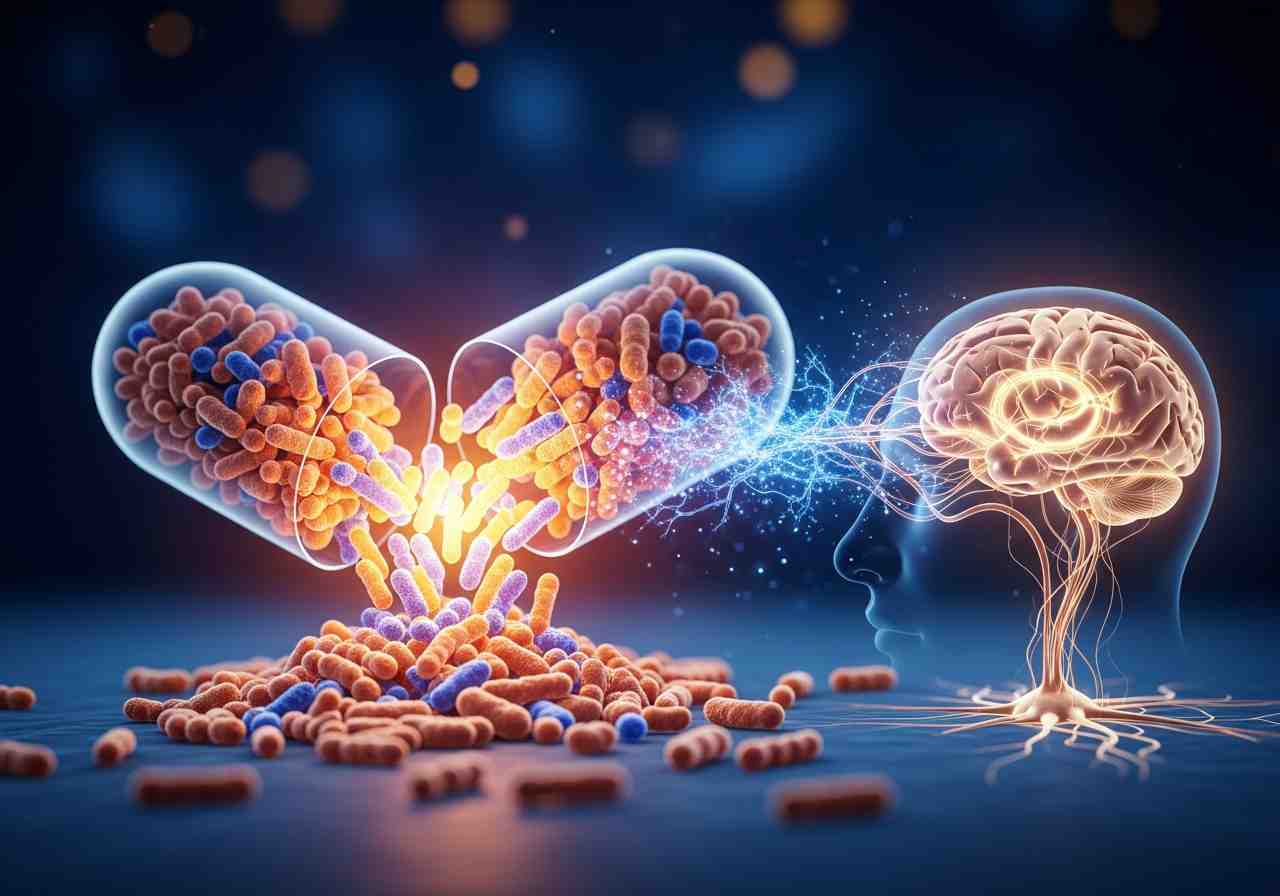
You swallow a pill in your physical wellbeing. Why not for your mind? The latest generation of supplements is precisely what it claims to be. They are referred to as psychobiotics. This new health slogan aims at your gut to calm your head. However, is this a real innovation in the area of mental health or it is shrewd marketing? We shall explore the science of the hype.
The Second Brain in Your Gut
There is continual communication between your guts and your brain. This isn’t a metaphor. They are connected through the biological superhighway that is the vagus nerve. There are trillions of microbes that synthesize neurochemicals. Actually, you are in your gut making 95 percent of your serotonin. This intestinal brain connection lies behind the contemporary psychobiotic science. It transforms our whole attitude to health.
We are not treating some brain disorder, but a whole system. Additional resources that might be helpful encompass websites providing counseling services (including counseling image, counseling creator, etc.).<|human|>- Dr. Anya Sharma, Nutritional Psychiatrist.
The consequences are beyond appalling. They give a fresh direction of mental health care.
The Science of the Strategies
It is not all probiotics created equal. There are strain types that are promising in clinical application. Lactobacillus rhamnosus JB-1 continuously lessens anxiety in animal trials. It operates by depolarizing GABA receptors. A second star Bifidobacterium longum 1714. Recent research in Scientific Reports in which healthy adults were subjected to perceived stress reduction was reduced by it. Clinical trials of B. longum NCC3001 on humans demonstrated that it alleviated depression in patients with IBS. These aren’t vague blends. They are targeted tools.
Studies indicate that certain strains are able to reduce the cortisol, our main hormone of stress by as much as 25.
It is essential to mental health interventions.
The Reality of the Supplement Aisle
Now, walk into any store. There will be dozens of mood support probiotics. Here is the place of hope and commerce. The problem? Regulation is minimal. In 2024 an analysis of 182 tests by Consumer Lab revealed that 30 percent of the tested probiotics had fewer live cells than were stated on the label. A lot of them fail to pass stomach acid. Others employ strains that are not related to the clinical research. The distance between a store shelf and petri dish in a laboratory is immense. This poses a great dilemma to health care consumers who are after dependable alternatives.
A Personal Experiment
I resolved to use a popular psychobiotic within a month. I wanted to cope with anxiety in the workplace. During the first week, I did not see anything. In week three, I started to feel a smooth digestion. My sleep level was a bit better. Was my mind calmer? Perhaps. But the effect was subtle. It was by no way a magic bullet. This personal experience is a reflection of the data. Its advantages are not only small but also very personal. The distance you go will certainly be different.
The Sarah Case Study: A Practical Case
Take one example of Sarah, a graphic designer whose anxiety is general. She added a certain stain of probiotic L. helveticus R0052, to her treatment. So it made the edge off, she reports. “My morning dread lessened. I felt more resilient.” Nevertheless, she did not quit her other health care routines. She considers the probiotic as a single element of her healthy lifestyle. Such is his adjunctive application wherein professionals perceive the greatest potential of mental enhancement in the nearest future.
Analyst Relationship: A Skeptical Polly-Anna
Gastroenterologist and medical advisor, Dr. Ken Brown has a level-headed view. He does not disregard the thrilling science. But he urges caution. According to Brown, the gut microbiome can be compared to an ancient forest, which is dense. You can not simply plant a new tree and hope that it will grow. Everything is dictated by the prevailing environment. Such analogy is an ideal expression of complexity. It recommends that future health care could be characterized by individual microbiome mapping prior to treatment.
Further than Probiotics: The Strength of Prebiotics
So what would happen if we nourished the good bacteria that we possess? That’s the role of prebiotics. These fiber diets are food to your intestinal microbes. A 2023 review in Nutrients* associated diets high in prebiotics with better processing of emotions. Strong prebiotics are such foods as garlic, onions, and oats. Think of it this way. The probiotics are similar to the planting of new seeds. Prebiotics are such as fertilizing the whole garden. To be so healthily, probably you need both.
The Final Verdict
So, where does this leave us? Psychobiotics represent a great novel in mental health care. The science is solid. The business products are, however, a wild west. They are an aiding device, they are not a standup treatment. The best psychobiotic plan nowadays is not in a pill. It’s on your plate. The healthy gut is resilient and is made by a variety of foods that are rich in fiber. And a well-built gut leaves off a peaceful mind. The real health innovation needs scientific wonder as well as the critical thinking. Demand both.