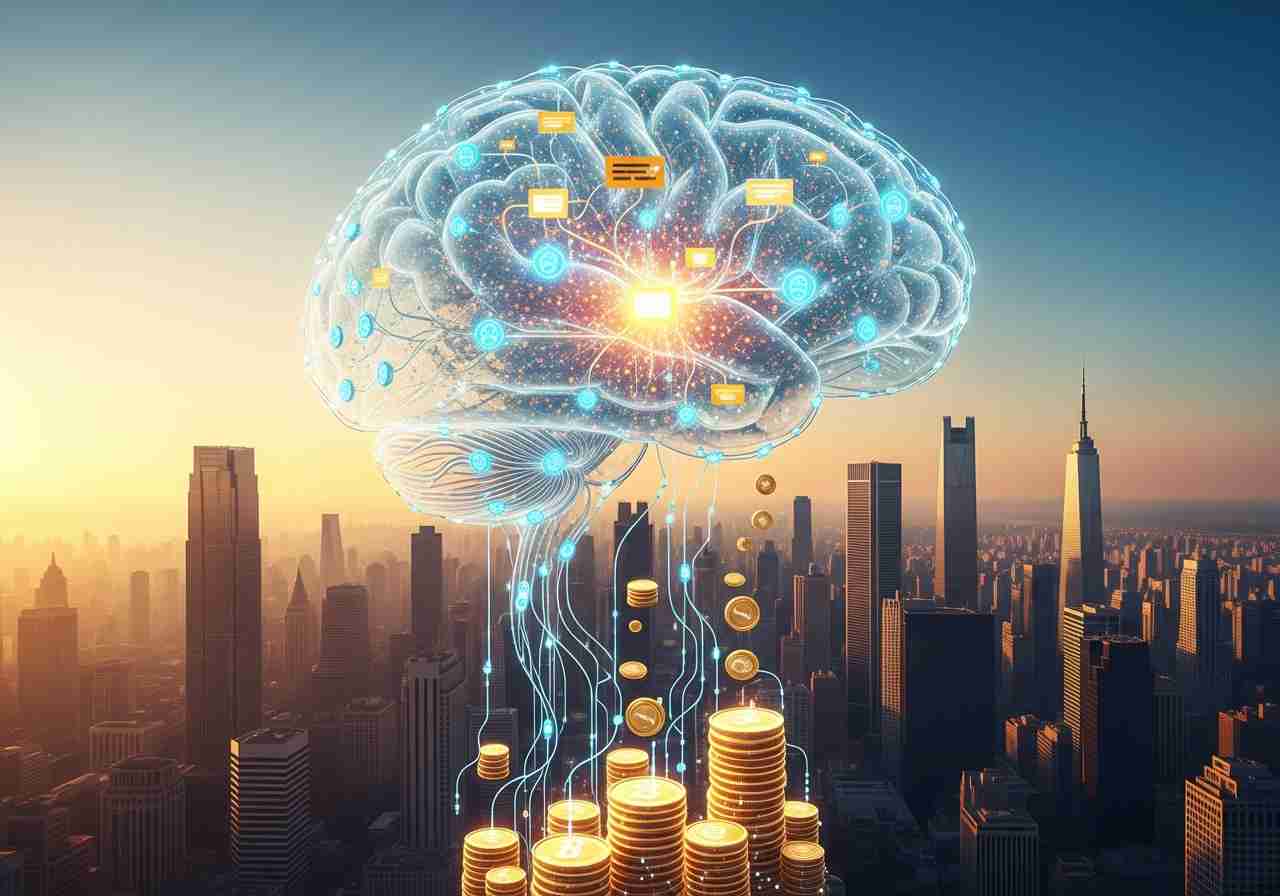
Web3’s Revolution Ai fuels its comeback: The Tokenization Revolution
Ever since the crypto crash, it was deafeningly quiet. The crypto cemetery and empty metaverse land? Look closer. It is a much greater structure being erected in the ruins. Monkey jpegs are not the actual Web3 revolution. It is occurring in the back offices of world finance, which are the not so glamorous. An effective combination of innovative AI and a robust IT infrastructure is finally realizing the initial potential of blockchain. This is the tokenization of all things.
Forget the hype. This is about function.
The Great Pivot: The End of Speculation and the Age of Utility
The market mania has burst. The market matured. The emphasis has finally been placed on the solution of real problems. The new question is simple. What are some of the ways blockchain technology can transform the traditional finance to be more efficient, transparent and accessible? The answer is tokenization. The procedure transforms material wealth – such as real estate or bonds – into computer-based representation on an encrypted registry. It is an essential financial IT overhaul. This is motivated by an appetite to produce and the emergence of a new regulatory environment. However, the real trigger is the technological one. At last, artificial intelligence is sufficiently strong to be able to connect the physical and the digital. This changes everything.
- It is a classic development of technologies which we are about to see.
- Hype cycles fade. Applications that are pragmatic survive.
The Trifecta Firing the Boom
How come that it is happening now? Three forces have been brought together.
First, the rate of interest was high setting the stage of gluttony in the stable yields. U.S. Treasury funds that were tokenized provided a definite way out. They offer blockchain effectiveness and conventional asset security. Second, regulating authorities are gradually offering guard-rails. MiCA in Europe is a view of regulation in the future. The discussion is shifting to beyond the question of whether and how.
The engine is now running.
Physical Resources, Physical Data
Let’s look at the numbers. It is not some hypothetical future. It is happening now.
Franklin Templeton, an old finance company, operates a funds management fund, a money market of over $380+ million on the Polygon blockchain. The OUSG token of Ondo Finance, a Treasury yielding project, has soared beyond 200 million dollars in assets. This is institutional affirmation. The Bank for International Settlement is even undertaking successful pilot projects in tokenization. The data is clear. Another financial market infrastructure is being established. It is built on blockchain. and it is already gaining the adoption of the institutions which might have scoffed at it.
The growth is staggering.
We are experiencing a quality and utility flight to quality. The capital is voting with its feet, and it is voting to have tokenized real-world assets. – CoinDesk Research Report, Q2 2024
But how does it actually work?
Invisible Engine: AI as the Bridge Builder
Tokenizing a stock is easy. Its price is public. However, what of a commercial building? Or a music royalty stream? Their value is not on a ticker. And AI is the key to this that is necessary. Smart oracles are not just a simple retrieval of information. They analyze it. AI has the capacity to analyze satellite images to analyze crop condition of a tokenized farm. It is capable of scanning IoT sensors that can track equipment in a tokenized factory. It even predicts cash flows of a tokenized private equity transaction. This is the smart layer which makes the tokenization trusted. It shifts us to mere digitization to intelligent digitization with inbuilt intelligence.
- The system is learning to see.
- It is a profound shift.
Whereas with AI, digitizing real-world assets that are considered complex is a huge data and value issue. It can be a solution that is scalable with AI. – A16z State of Crypto Report, 2024
A Case Study: The Tokenized Manhattan Tower
To illustrate with a real-world example, consider a property company that possesses a $500 million skyscraper in Manhattan. Historically, it has been a nightmare to sell a share, as it entails brokers, lawyers, and months of work, resulting in an illiquid market. Now, suppose that they tokenize the asset. In this scenario, their valuation model is an AI-based tool that examines local rent rolls, occupancy, and economic data. The building is then divided into a million digital tokens, each representing a fractional share. Consequently, a Tokyo investor can acquire a $5,000 investment without hassle. Furthermore, the rental income is automatically distributed by means of smart contracts, which are proven by AI oracles. As a result, liquidity is created and efficiency is unlocked. Importantly, this is not science fiction; in fact, such projects are currently at an advanced level.
Technology is not the impediment. It is mindset.
Stepping the Minefield: The Roadblocks Ahead
Let’s be clear. The way is not even smooth. The regulatory system is a fractured one. Who owns a tokenized structure, which deals on the international level? The SEC? The FCA? This remains unclear. There exists the oracle problem also. In case of corruption of the artificial intelligence supplying information to the blockchain, the whole system collapses. Security is paramount. Moreover, to have genuine liquidity, it must have liquid markets. There are a lot of tokenized asset markets that are young. They can be thin. These are real challenges. However, each day they are being resolved by the groups of clever engineers and lawyers. Progress is relentless.
- The bridge is in the process of construction.
- But the goal is beheld at last.
A Solo Reflection: The Programmable Economy
The trend cannot be ignored since the author has worked as a consultant at Wall Street banks and Web3 startups. We are not only shifting towards dynamic assets, but also programmable assets. Herein the mainstay of the revolution. It does not simply involve the placement of an old asset on the new ledger. It is concerning the development of new financial tools. Consider a tokenized carbon credit which is automatically retired once a forest is mature, which is checked by an AI who analyses the satellite data. That is a programmable asset. It is an amalgamation of AI and blockchain and IT that develops completely new economic frameworks. This is the true potential. It is not just a faster horse. It is the invention of the car.
Conclusion: The Silent Period is Finished
The dialogue has to develop. Whether the asset tokenization will occur, is no longer a question. The facts are too many. It is already here. The question now arises which of the old systems will be the first to be totally changed by this intelligent, efficient model. AI and blockchain convergence are creating the second wave of the global economy. It is constructing it here and now in plain sight. The quiet comeback is over. The disruptive, cacophonic build out is underway. Your industry is next.